Showing posts with label high speed rail. Show all posts
Monday, May 31, 2010
'Steam' Building Over California High Speed Rail Route
No doubt, California’s high speed rail project is a hot topic. There’s a lot to love and hate with this project. Earlier this year, I wrote an opinion article in The Bakersfield Californian about Bakersfield competing for a test track and heavy maintenance facility. (“High-speed rail prize awaits the valley community that has its act together,” by John Hardisty)
In the Sunday, May 30, edition, Californian reporter Steve Mayer wrote about the controversy swirling around proposed high speed rail routes. In his story, the routes through Bakersfield were delineated with “blue” and “red” lines, but both basically follow an existing railroad alignment.
The plan is for the route to enter Bakersfield from the northwest, stop at a downtown terminal and exit to the east on the way to the Antelope Valley and beyond to Southern California.
Because of the speed, both routes deviate a bit – in a sweeping curve – from the existing railroad alignment. Likely historic homes and buildings are in its path, causing controversy in the city. But Bakersfield is not alone in raising concerns about the path high speed rail will take. Farmers up and down the San Joaquin Valley are expressing concerns. Battles have broken out in the Bay Area and Southern California.
Bringing a high speed rail line through Bakersfield will be disruptive, as well as beneficial. Issues of safety and noise will need to be addressed for either the blue or red lines. Rather than deciding that the exact alignment will be where the preliminary study lines have been drawn, the design engineers and environmental reviewers should be refining a route that would least impact the community.
Wherever possible, they need to avoid schools, hospitals, homes, businesses and churches.
In the end, perhaps the alignment can follow some of the blue and some of the red route noted in The Bakersfield Californian’s story. As they get down to the details of design, you can bet they won’t follow any proposed route 100 percent.
Although this project has been in the works for more than a decade, it has been more "theory" than "fact." Voters approving a nearly $10 billion bond measure in 2008 and then the Obama administration recently pitching in another $2.6 billion (thereabouts) has moved the project into the "possible" category. That means people are now bickering over the details, like where the tracks will go. If you think getting a freeway alignment adopted is tough, you ain't seen nothing yet. This could be a bigger battle.
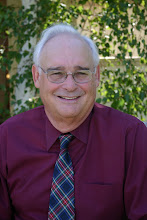
John Hardisty (Jack) retired as the Bakersfield city development services director in 2004. He is now a court mediator and planning consultant. His comments appear on The Bakersfield Californian Website and on his Planning Beat blog.
Labels:
Bakersfield,
California,
high speed rail,
John Hardisty
Thursday, February 25, 2010
HIGH SPEED RAIL NEEDS CREDIBILITY
California’s high speed rail system will either be an amazing success, or an amazing failure. Dueling ridership predictions revealed this month paint both pictures. In early February, some transportation analysts predicted relatively few people will ride the high speed train, making the system a money loser. But later in the month, Bay Area handwringers, armed with another consultant’s study, predicted high speed rail would be so popular it would pull 6 million passengers a year away from their local airports.
The bottom line: No one knows for sure how many people will ride the high speed rail system if California can get it built. It all depends. On what? On such factors as the cost of a ticket, on where people want to go, on alternative transportation. We are talking 20 or 30 years into the future. You can guess. But no one knows for sure.
And that’s what transportation modeling is all about. That’s why communities can have plans for projects, such as subdivisions, and studies that predict their impacts, such as traffic studies. But when the project is built and occupied, the impacts may be better or worse than predicted.
Modeling is just a structured way of guessing how people might behave under specified conditions. Factors and assumptions are placed in these models by fallible human beings, who may be influenced by their preferences. Since most of us are not experts in modeling, we usually look at the predicted results through our own lenses and decide if they make sense. That often depends on what we would like to believe. We might even look deeper into the assumptions knowing that those who are making the models control the outcome.
To have credibility, those making the models that predict ridership on a future California high speed rail system must clearly lay out for a skeptical public the assumptions and methods they are using.
Why does this matter? Because the $10 billion voters approved in 2008 to help build the system and the $2.6 billion in federal stimulus money that now has been provided by the Obama administration is just a fraction of what it will cost to build the $42 billion-plus San Francisco to Los Angeles route. Taxpayers and private investors still must be convinced to keep investing in the system. That’s going to require a whole lot of credibility and honesty from the California High Speed Rail Authority.
Written by John Hardisty, Bakersfield http://www.svs2help.com/
The bottom line: No one knows for sure how many people will ride the high speed rail system if California can get it built. It all depends. On what? On such factors as the cost of a ticket, on where people want to go, on alternative transportation. We are talking 20 or 30 years into the future. You can guess. But no one knows for sure.
And that’s what transportation modeling is all about. That’s why communities can have plans for projects, such as subdivisions, and studies that predict their impacts, such as traffic studies. But when the project is built and occupied, the impacts may be better or worse than predicted.
Modeling is just a structured way of guessing how people might behave under specified conditions. Factors and assumptions are placed in these models by fallible human beings, who may be influenced by their preferences. Since most of us are not experts in modeling, we usually look at the predicted results through our own lenses and decide if they make sense. That often depends on what we would like to believe. We might even look deeper into the assumptions knowing that those who are making the models control the outcome.
To have credibility, those making the models that predict ridership on a future California high speed rail system must clearly lay out for a skeptical public the assumptions and methods they are using.
Why does this matter? Because the $10 billion voters approved in 2008 to help build the system and the $2.6 billion in federal stimulus money that now has been provided by the Obama administration is just a fraction of what it will cost to build the $42 billion-plus San Francisco to Los Angeles route. Taxpayers and private investors still must be convinced to keep investing in the system. That’s going to require a whole lot of credibility and honesty from the California High Speed Rail Authority.
Written by John Hardisty, Bakersfield http://www.svs2help.com/
Labels:
Bakersfield,
California,
high speed rail,
John Hardisty
Sunday, February 14, 2010
VALLEY CITIES COMPETE FOR RAIL PRIZE
A recent Fresno Bee editorial demanded leaders in its city get their “act together.” The same goes for their counterparts in Kern County as the scramble for federal stimulus funds to build a high speed rail system shifts into high gear.
President Obama last week announced that California will receive $2.3 billion, the largest share of an $8 billion allocation to build high speed rail systems in 13 of the nation’s transportation corridors.
Californians are a long way from buying a ticket to ride a high-speed train in this state. A debate still rages over the system’s $42.6 billion construction price tag, ongoing operating costs and its disputed business plan.
But with voters approving $9 billion in bonds in 2008 to help finance the system and now with $2.3 billion in federal job-creation funds promised, it appears some aspects of the project will become a reality.
The big “prize” for the Central Valley is the construction of a test track and heavy maintenance facility.
Fresno leaders want the facility, which will employ 1,500 people, including train operators, engineers and rolling stock maintenance staff, built in Fresno. Kern County leaders want it built on one of two local sites – one in Shafter, the other in Wasco.
By the Jan. 15 deadline, the California High Speed Rail Authority had received 15 “expressions of interest” from valley communities, including Fresno’s and Kern’s.
The Fresno Bee called the heavy maintenance facility “the most important economic development project that Fresno County could hope to lure to our community. … That’s why the competition will be stiff, and Fresno County must have a first-class proposal every step of the way. No internal bickering. No local turf battles. We don’t need a repeat of Merced getting the University of California campus because Fresno did not have its act together.”
Funny thing: In news reports coming out of Merced are chest-thumping vows to “do it again” to Fresno and the rest of the valley. Merced community leaders are dragging out the game plan they used to snatch the UC campus away from competitors years ago. Now they are promoting the former Castle Air Force Base for a heavy maintenance facility.
The Central Valley is critical to high speed rail’s development. The valley’s flat, open and rural stretches allow the 220 mph trains to be tested and certified for use in other parts of the United States. The test track will become part of California’s high speed rail system that will take passengers from Los Angeles to San Francisco.
To be in the running, a site must meet minimum criteria, including being near a proposed HSR route; having a parcel shaped and sized to accommodate the facility; and having other transportation linkages, access to utilities, appropriate zoning and an available labor force. The site also should not be encumbered with environmental problems.
Kern’s Shafter site is 640 acres located on the east side of existing railroad tracks, north of 7th Standard Road, adjacent to the International Trade and Transportation Center, and near Kern County’s Meadows Field Airport.
The Wasco site is 421 acres located south of Highway 46, near J Street, in an undeveloped industrial area, with existing railroad tracks nearby.
A final selection, which will be made by HSRA directors in about 15 months, will be based on more than basic criteria, and environmental and economic considerations. It also will be based on politics and salesmanship.
Fresno already is guaranteeing it will “sweeten” the deal by scraping together $25 million to buy and donate the land. Clearly all the competitors will have to come up with “sweeteners,” requiring contributions from private investors and local public agencies.
A campaign to promote the Shafter and Wasco sites to HSRA directors, private investors and local taxpayers is needed.
Ray Watson, chairman of the Kern County Board of Supervisors and a Kern Economic Development Corp. director, has wisely called for the creation of a blue ribbon committee to get our community’s “act together.”
The “prize” Kern County, Shafter, Wasco and all of metropolitan Bakersfield stands to win: 1,500 high-paying permanent jobs, many more construction jobs, increased tax revenues to support public services, and increased business for support services and related industries.
This is a multi-million dollar prize worth fighting for.
This article by John Hardisty (Jack) appeared first in The Bakersfield Californian on Feb. 3, 2010. Hardisty is a Bakersfield, Calif., mediator and land-use planning consultant. He can be contacted through his Website www.svs2help.com/
President Obama last week announced that California will receive $2.3 billion, the largest share of an $8 billion allocation to build high speed rail systems in 13 of the nation’s transportation corridors.
Californians are a long way from buying a ticket to ride a high-speed train in this state. A debate still rages over the system’s $42.6 billion construction price tag, ongoing operating costs and its disputed business plan.
But with voters approving $9 billion in bonds in 2008 to help finance the system and now with $2.3 billion in federal job-creation funds promised, it appears some aspects of the project will become a reality.
The big “prize” for the Central Valley is the construction of a test track and heavy maintenance facility.
Fresno leaders want the facility, which will employ 1,500 people, including train operators, engineers and rolling stock maintenance staff, built in Fresno. Kern County leaders want it built on one of two local sites – one in Shafter, the other in Wasco.
By the Jan. 15 deadline, the California High Speed Rail Authority had received 15 “expressions of interest” from valley communities, including Fresno’s and Kern’s.
The Fresno Bee called the heavy maintenance facility “the most important economic development project that Fresno County could hope to lure to our community. … That’s why the competition will be stiff, and Fresno County must have a first-class proposal every step of the way. No internal bickering. No local turf battles. We don’t need a repeat of Merced getting the University of California campus because Fresno did not have its act together.”
Funny thing: In news reports coming out of Merced are chest-thumping vows to “do it again” to Fresno and the rest of the valley. Merced community leaders are dragging out the game plan they used to snatch the UC campus away from competitors years ago. Now they are promoting the former Castle Air Force Base for a heavy maintenance facility.
The Central Valley is critical to high speed rail’s development. The valley’s flat, open and rural stretches allow the 220 mph trains to be tested and certified for use in other parts of the United States. The test track will become part of California’s high speed rail system that will take passengers from Los Angeles to San Francisco.
To be in the running, a site must meet minimum criteria, including being near a proposed HSR route; having a parcel shaped and sized to accommodate the facility; and having other transportation linkages, access to utilities, appropriate zoning and an available labor force. The site also should not be encumbered with environmental problems.
Kern’s Shafter site is 640 acres located on the east side of existing railroad tracks, north of 7th Standard Road, adjacent to the International Trade and Transportation Center, and near Kern County’s Meadows Field Airport.
The Wasco site is 421 acres located south of Highway 46, near J Street, in an undeveloped industrial area, with existing railroad tracks nearby.
A final selection, which will be made by HSRA directors in about 15 months, will be based on more than basic criteria, and environmental and economic considerations. It also will be based on politics and salesmanship.
Fresno already is guaranteeing it will “sweeten” the deal by scraping together $25 million to buy and donate the land. Clearly all the competitors will have to come up with “sweeteners,” requiring contributions from private investors and local public agencies.
A campaign to promote the Shafter and Wasco sites to HSRA directors, private investors and local taxpayers is needed.
Ray Watson, chairman of the Kern County Board of Supervisors and a Kern Economic Development Corp. director, has wisely called for the creation of a blue ribbon committee to get our community’s “act together.”
The “prize” Kern County, Shafter, Wasco and all of metropolitan Bakersfield stands to win: 1,500 high-paying permanent jobs, many more construction jobs, increased tax revenues to support public services, and increased business for support services and related industries.
This is a multi-million dollar prize worth fighting for.
This article by John Hardisty (Jack) appeared first in The Bakersfield Californian on Feb. 3, 2010. Hardisty is a Bakersfield, Calif., mediator and land-use planning consultant. He can be contacted through his Website www.svs2help.com/
Thursday, February 4, 2010
HIGH SPEED RAIL 'PRIZE' AWAITS
A recent Fresno Bee editorial demanded leaders in its city get their “act together.” The same goes for their counterparts in Kern County as the scramble for federal stimulus funds to build a high speed rail system shifts into high gear.
President Obama last week announced that California will receive $2.3 billion, the largest share of an $8 billion allocation to build high speed rail systems in 13 of the nation’s transportation corridors.
Californians are a long way from buying a ticket to ride a high-speed train in this state. A debate still rages over the system’s $42.6 billion construction price tag, ongoing operating costs and its disputed business plan.
But with voters approving $9 billion in bonds in 2008 to help finance the system and now with $2.3 billion in federal job-creation funds promised, it appears some aspects of the project will become a reality.
The big “prize” for the Central Valley is the construction of a test track and heavy maintenance facility.
Fresno leaders want the facility, which will employ 1,500 people, including train operators, engineers and rolling stock maintenance staff, built in Fresno. Kern County leaders want it built on one of two local sites – one in Shafter, the other in Wasco.
By the Jan. 15 deadline, the California High Speed Rail Authority had received 15 “expressions of interest” from valley communities, including Fresno’s and Kern’s.
The Fresno Bee called the heavy maintenance facility “the most important economic development project that Fresno County could hope to lure to our community. … That’s why the competition will be stiff, and Fresno County must have a first-class proposal every step of the way. No internal bickering. No local turf battles. We don’t need a repeat of Merced getting the University of California campus because Fresno did not have its act together.”
Funny thing: In news reports coming out of Merced are chest-thumping vows to “do it again” to Fresno and the rest of the valley. Merced community leaders are dragging out the game plan they used to snatch the UC campus away from competitors years ago. Now they are promoting the former Castle Air Force Base for a heavy maintenance facility.
The Central Valley is critical to high speed rail’s development. The valley’s flat, open and rural stretches allow the 220 mph trains to be tested and certified for use in other parts of the United States. The test track will become part of California’s high speed rail system that will take passengers from Los Angeles to San Francisco.
To be in the running, a site must meet minimum criteria, including being near a proposed HSR route; having a parcel shaped and sized to accommodate the facility; and having other transportation linkages, access to utilities, appropriate zoning and an available labor force. The site also should not be encumbered with environmental problems.
Kern’s Shafter site is 640 acres located on the east side of existing railroad tracks, north of 7th Standard Road, adjacent to the International Trade and Transportation Center, and near Kern County’s Meadows Field Airport.
The Wasco site is 421 acres located south of Highway 46, near J Street, in an undeveloped industrial area, with existing railroad tracks nearby.
A final selection, which will be made by HSRA directors in about 15 months, will be based on more than basic criteria, and environmental and economic considerations. It also will be based on politics and salesmanship.
Fresno already is guaranteeing it will “sweeten” the deal by scraping together $25 million to buy and donate the land. Clearly all the competitors will have to come up with “sweeteners,” requiring contributions from private investors and local public agencies.
A campaign to promote the Shafter and Wasco sites to HSRA directors, private investors and local taxpayers is needed.
Ray Watson, chairman of the Kern County Board of Supervisors and a Kern Economic Development Corp. director, has wisely called for the creation of a blue ribbon committee to get our community’s “act together.”
The “prize” Kern County, Shafter, Wasco and all of metropolitan Bakersfield stands to win: 1,500 high-paying permanent jobs, many more construction jobs, increased tax revenues to support public services, and increased business for support services and related industries.
This is a multi-million dollar prize worth fighting for.
John Hardisty (Jack) of Bakersfield is a mediator and land-use planning consultant. He can be contacted through his Website www.svs2help.com/
This article appeared first in The Bakersfield Californian on Feb. 3, 2010.
President Obama last week announced that California will receive $2.3 billion, the largest share of an $8 billion allocation to build high speed rail systems in 13 of the nation’s transportation corridors.
Californians are a long way from buying a ticket to ride a high-speed train in this state. A debate still rages over the system’s $42.6 billion construction price tag, ongoing operating costs and its disputed business plan.
But with voters approving $9 billion in bonds in 2008 to help finance the system and now with $2.3 billion in federal job-creation funds promised, it appears some aspects of the project will become a reality.
The big “prize” for the Central Valley is the construction of a test track and heavy maintenance facility.
Fresno leaders want the facility, which will employ 1,500 people, including train operators, engineers and rolling stock maintenance staff, built in Fresno. Kern County leaders want it built on one of two local sites – one in Shafter, the other in Wasco.
By the Jan. 15 deadline, the California High Speed Rail Authority had received 15 “expressions of interest” from valley communities, including Fresno’s and Kern’s.
The Fresno Bee called the heavy maintenance facility “the most important economic development project that Fresno County could hope to lure to our community. … That’s why the competition will be stiff, and Fresno County must have a first-class proposal every step of the way. No internal bickering. No local turf battles. We don’t need a repeat of Merced getting the University of California campus because Fresno did not have its act together.”
Funny thing: In news reports coming out of Merced are chest-thumping vows to “do it again” to Fresno and the rest of the valley. Merced community leaders are dragging out the game plan they used to snatch the UC campus away from competitors years ago. Now they are promoting the former Castle Air Force Base for a heavy maintenance facility.
The Central Valley is critical to high speed rail’s development. The valley’s flat, open and rural stretches allow the 220 mph trains to be tested and certified for use in other parts of the United States. The test track will become part of California’s high speed rail system that will take passengers from Los Angeles to San Francisco.
To be in the running, a site must meet minimum criteria, including being near a proposed HSR route; having a parcel shaped and sized to accommodate the facility; and having other transportation linkages, access to utilities, appropriate zoning and an available labor force. The site also should not be encumbered with environmental problems.
Kern’s Shafter site is 640 acres located on the east side of existing railroad tracks, north of 7th Standard Road, adjacent to the International Trade and Transportation Center, and near Kern County’s Meadows Field Airport.
The Wasco site is 421 acres located south of Highway 46, near J Street, in an undeveloped industrial area, with existing railroad tracks nearby.
A final selection, which will be made by HSRA directors in about 15 months, will be based on more than basic criteria, and environmental and economic considerations. It also will be based on politics and salesmanship.
Fresno already is guaranteeing it will “sweeten” the deal by scraping together $25 million to buy and donate the land. Clearly all the competitors will have to come up with “sweeteners,” requiring contributions from private investors and local public agencies.
A campaign to promote the Shafter and Wasco sites to HSRA directors, private investors and local taxpayers is needed.
Ray Watson, chairman of the Kern County Board of Supervisors and a Kern Economic Development Corp. director, has wisely called for the creation of a blue ribbon committee to get our community’s “act together.”
The “prize” Kern County, Shafter, Wasco and all of metropolitan Bakersfield stands to win: 1,500 high-paying permanent jobs, many more construction jobs, increased tax revenues to support public services, and increased business for support services and related industries.
This is a multi-million dollar prize worth fighting for.
John Hardisty (Jack) of Bakersfield is a mediator and land-use planning consultant. He can be contacted through his Website www.svs2help.com/
This article appeared first in The Bakersfield Californian on Feb. 3, 2010.
Labels:
Amtrak,
Bakersfield,
fresno,
high speed rail,
John Hardisty,
merced
Subscribe to:
Posts (Atom)