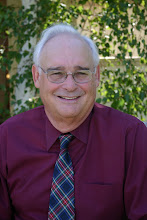
John Hardisty spent nearly 30 years guiding the city of Bakersfield, Calif., forward as its development services director. He managed the city’s Planning Department as Bakersfield grew to include about 143 square miles and serve a population of nearly 340,000 people.
During those years, his focus was on the present and the future. Now retired from the city and working as a planning consultant and court mediator, Hardisty’s focus is also on the past, as he writes an occasional column for The Bakersfield Californian .
Beginning with his May 23 feature on the turn-of-the-century home of the late Louise V. Olcese, a Bakersfield capitalist, Hardisty will write about the historic, significant and sometimes downright strange homes and buildings in Bakersfield.
Bakersfield, at the southern end of California’s San Joaquin Valley, has a rich history rooted in oil and agriculture. It also has a hard-scrabble reputation born of the struggles of the Depression-era Okies, who flocked to the community.
Known for its brand of Country Western music and Basque food, Bakersfield can be as sophisticated as any city – and mind you, it’s California’s 11th largest – but it can also be a bit quirky.
Hardisty’s occasional column will highlight such attractions as Bakersfield’s tallest building and explain why at 12 floors it was required to obtain a variance from the city’s height limitation. He also will interview the architect of Bakersfield’s futuristic-looking triangle building and recall the 1970s battle waged to get city clearance to build the “funny looking thing.”
At the center of what was once the city of Kern (east Bakersfield) is a sprawling, formerly elegant train station. He will tour readers through the now mostly boarded up and weather-beaten structure, which is used by the railroad to house a skeleton staff and store supplies.
“To keep moving forward, it is important for every community to understand its past,” said Hardisty, explaining the focus of his column. “To attempt progress without an understanding and respect for history is like building without a foundation.”
This sensitivity to history is particularly important to Bakersfield. The city was hit in 1952 by an earthquake that destroyed much of its downtown and many of its public buildings. Some contend Bakersfield’s historic character was turned to rubble by the earthquake. But if you look closely, you will find some remnants have survived.
Hardisty’s column will take readers on a treasure hunt for Bakersfield’s historic character. The articles will be reprinted on this blog beginning with the May 23, 2010 feature about the Olcese House.
Showing posts with label real estate. Show all posts
Showing posts with label real estate. Show all posts
Sunday, May 23, 2010

History Hunt: Olcese House Shows Bakersfield's Character

He collects furniture, statues and pottery. He even collects old family photos of people he doesn’t know. He finds them in second-hand stores and hangs them on the walls of the old houses he collects in east Bakersfield.
On a recent warm spring morning, I sat on the porch of the “Olcese house,” one of Hendrix’s most interesting and historic East Bakersfield homes, and discussed his compulsive collecting.
Hendrix, 69, is a retired educator, who spent most of his career as a teacher and counselor at East Bakersfield High School. An Oklahoma native, who moved to Bakersfield to live with relatives in the 1950s, Hendrix remembers watching his father work with tools as he built cabinets. That inspired Hendrix to begin collecting tools and fix-it books.
To supplement his teaching salary, Hendrix started collecting fixer-upper Bakersfield homes and turning them into rentals.
“I like to work with my hands and it was a good diversion from teaching,” he explained. “In the summers, I would work in construction, doing repairs for other people. I thought, ‘Why not acquire my own property. I love old houses.’”
His interest in buying houses shifted from those built in the 1930s and 1940s to some of the city’s oldest houses -- those built at the turn of the century in east Bakersfield.
He said he spent hours talking to the late Judge Frank Noriega in an unsuccessful attempt to buy the family’s vintage home on Baker Street, which has been renovated and turned into a reception hall.
It was during those long chats that Hendrix learned about the histories and myths of the neighborhood’s other landmark buildings, and Hendrix set his sights on the Olcese house at 528 Monterey St.
Weather-beaten and in need of repair, the house was built by Louis V. Olcese for his bride in the late 1800s. The city’s register of historic buildings did not pinpoint the construction date. During the century that followed, colorful and sometimes tragic stories unfolded within it walls.
Before telling some of those early stories, I’ll skip ahead to the present. Hendrix bought the house in 1983, after it fell briefly into the hands of a real estate speculator. The speculator had given it a quick lick of paint, leased it to a preschool and then placed it up for sale again. While he worked on its restoration, Hendrix moved into the house. He lived in there for the next 18 years, before buying another fixer upper at Flower and Baker streets, where he lives today.
The Olcese house now is called Griffins Gate, a 26-bed home for men dually diagnosed as mentally ill and substance abusers, operated by Hendrix’s non-profit organization Casa de Amigos. The stately rooms have been converted to dormitories, offices and dining halls. But the exterior is restored to a condition that would surely please its original owner.
Hendrix has pieced together most of the home’s history from the stories told by Judge Noriega and neighbors. And occasionally people will walk by to take a look and share their memories.
Olcese, the son of Italian immigrants, moved to Bakersfield as a young man from Northern California. The railroad line had reached East Bakersfield. Basque shepherds were settling in the area. Fortunes were being made lending money and outfitting settlers in this emerging commercial hub.
Olcese went into the mercantile business with Beneditto Ardizzi. Hendrix was told Olcese lived in a lavish apartment above his store until he decided to marry a young opera singer. He built the house on Monterey Street as a wedding present for his bride.
In the city’s historic resources inventory, consultant Christopher Brewer describes the Olcese house as “an excellent example of vernacular architecture.” With Hendrix’s subsequent restoration, Brewer concluded it would be eligible for inclusion in a historic register or district.
Hendrix acknowledges that Olcese spared few expenses as he combined several architectural styles. The home has a vented gablet, a turret, an oval window overlooking a covered porch that is supported by round columns, boxed eaves and gables, and double-hung windows.
Shortly after Olcese’s marriage, his bride left for a European singing tour. By all accounts that Hendrix has been given, in her absence, Olcese found a young live-in maid irresistible and a baby boy was born. Olcese and his bride divorced when she returned from her tour. He sold the Monterey Street house.
Olcese’s wealth grew. He bought acres of land that he ranched. He form a bank. But in 1929, at a relatively young age, he dropped dead in San Francisco en route to visit his sister, who lived in Piedmont. An obituary published in The Modesto Bee described him as “one of the wealthiest men in Kern County.”
Two years later, a story in The Bakersfield Californian reported Olcese Kramer, a naval officer who claimed to be Olcese’s “natural son,” reached a court settlement with Olcese’s sisters and brothers to share the estate. Although settlement details were not revealed in the news story, an attorney said “the ramifications are so great” that it would take “some time until the whole affair is settled.”
Hendrix said the Olcese house passed first into the hands of a wealthy couple. The husband was a county official and the wife a physician. He said neighbors and Noriega told him about patients walking up its stairs to be seen by the doctor.
Preoccupied by both their daughter and by “appearances,” the couple borrowed against the home to pay for a lavish wedding and to buy furniture. When they could not pay their bills, Hendrix said they lost the home to foreclosure.
An investor bought it reportedly for $1,700 and gave it to his newlywed daughter and son-in-law. Over the next several decades, the childless couple lived in the home their entire marriage.
Eventually a gas lighting system was replaced by electricity. But neither air conditioning, nor heating systems were installed until the then widowed owner sold it in the late 1970s to the real estate speculator who resold it to Hendrix.
“The neighbors were shocked,” Hendrix said, explaining that they thought the woman was wealthy. They chalked up the home’s lack of maintenance, the owner’s unwillingness to install air conditioning and her habit of wearing layers of clothing during frigid winter months to her being eccentric.
In fact, the woman was living off the property she inherited from her investor-father. As she needed money, she would sell off a house or commercial building. Reportedly she was running out of money when she sold the Olcese house for just $16,000. Hendrix paid $90,000 for it when it was resold a short time later.
Hendrix credits the woman’s poverty for the home’s historic integrity. She simply did not have the money to “modernize” the structure.
“The thing I love about old houses it that everything has a story,” Hendrix said, admitting that restoring them is costly, time-consuming and just plain hard work.
His advice to others who might be tempted to buy and restore a turn-of-the-century home: “Do it only if you can do most of the work yourself. And do it for love, not to make money.”
This article by John Hardisty (Jack) appeared first in The Bakersfield Californian on May 23, 2010.
Sunday, December 27, 2009
TOUGH LOVE FOR REAL ESTATE

When Bill Thomas was chairman of the tax-writing House Ways and Means Committee, he thought too much emphasis was being placed on home ownership.
“If you can afford to buy a house, you are rewarded handsomely in a number of financial ways. If you can’t, you are punished because you pay rent. You can’t even subtract rent from your income tax,” said Thomas, who retired in 2006, after representing Bakersfield in Congress for 28 years.
So the concept that became the “American Dream” was that everyone should own a home, which will be a source of equity, an asset. Then these homeowners can borrow against their homes.
“And as we have seen, people have been put into homes that they couldn’t afford in the beginning and which they certainly could not afford once balloon payments kicked in,” Thomas said during a recent interview with The Californian. “There was a lot of money to be made on these subprime loans. Very clever people found ways to reinsure and monetize mortgages that probably had no value.”
Thomas has been appointed vice chairman of the Fiscal Crisis Inquiry Commission, which was created by Congress and President Obama to explain how “clever people,” such as Wall Street bankers and their real estate cohorts on Main Street, created worthless financial instruments that have rocked the nation’s economy nearly off its foundations.
While the consequences of the subprime mortgage industry are far-reaching and painful, the misplaced rewarding of debt is not confined to the real estate industry. Thomas noted the “debt versus equity” imbalance goes all the way back to the Enron scandal.
“It was cheaper to carry equity than debt. And you could hide debt with creative instruments that the regulators didn’t fully understand, in my opinion, and didn’t see until it was too late,” he said. “Enron was a prime example.
“If we had changed the tax code to be neutral on renting or owning, we would not have had the problems of subprime mortgages and all the rest. People could rent and feel good about it and have a deduction on their income taxes.
“We banned in the early 80s the deduction of personal interest credit on your income tax, but we did not build a fire wall between the debt in owning a home through mortgage and your ability to pull equity out of the home to spend the money on the RV you couldn’t get a tax deduction for,” he said. “We even had instruments that gave you a check each month for the increased equity, so they made sure you had no equity.”
There was the belief that the market value of property would go up every year. But if it went down, instead, and an owner had been pulling equity out of his home, he quickly found himself “upside down” – owing more than the home was worth.
“And there were cases around here, where Realtors and appraisers were not willing to wait for the quarter, or the year or two years to see the appreciation that always came,” said Thomas. “They began jiggering it around and flipping it in what amounted to illegal appraisal activity to drive the price up.
“The newspaper ran stories about people not following rules, ethical standards and laws. I am not talking about banks. I am talking about real estate people,” said Thomas. “A piece of property was worth $1 million and a few months later it was worth $1.4 million. Why? Because they paid the appraiser to reappraise the place, just like Wall Street paid for the Moody’s triple-A rating” on combined mortgages.
“Banks were not used to loaning money to people who didn’t have a job and could not meet the monthly payments. You could write a mortgage to someone who occupied the house, but they never made the first payment. That’s called a subprime mortgage and they were being written all over the place.
“Then you could combine them, get a certification, get a reinsurance policy and send it out [to investors]. When it started unraveling, the principle reinsurance agency was AIG,” said Thomas, noting Moody’s triple-A ratings on these combined mortgages were paid for in the same way some were paying for inflated real estate appraisals.
“You haven’t seen any real focus on the rating agencies in this first wave of reform coming through Congress. That has to be done,” said Thomas, noting that the role of rating agencies, such as Moody’s, in the ongoing financial scandal will be investigated by his commission.
“Look at these combined mortgages that carried a triple-A rating,” said Thomas. “AIG wrote a reinsurance deal on them, notwithstanding the fact that all the reinsurance that had been written was worth X times what AIG had in cash.
“AIG never thought it would have to pay off for those because they had triple-A ratings. So all of a sudden, you are sitting there with this thing and it isn’t triple-A. Some of it may be good, but some of it was obviously bad and nobody knew what it was worth. And it’s not buildings. It is artificially combined mortgages.
“So it isn’t easy to unravel. And we are still in the middle of that.”
[What would you tell Bill Thomas to investigate when his Financial Crisis Inquiry Commission kicks into "high gear" next month? Send your comments directly to John Hardisty at planningbeat@yahoo.com, or post them on this blog.]
A version of this article written by Dianne Hardisty first appeared in The Bakersfield Californian on Dec. 27, 2009.
Subscribe to:
Posts (Atom)