Sunday, May 30, 2010
Bakersfield Offers California White Water Rafting Experience on the Kern River
Late season storms in the Sierra Nevada Mountains and a thick blanket of snow have white water rafting operators on the Kern River, in Central California, celebrating.
Water on the Kern River is at its highest level in years, said Darron Nilsson, operator of River's End Rafting & Adventure Co. in Bakersfield, Calif. Nilsson predicts rafting on the river will continue through Labor Day.
In recent, drought-plagued years, rafting operators were lucky to squeeze a July season out of the Kern River. But with the snow pack this year at 143 percent of normal, the river is raging. Last year’s snow pack was only 34 percent.
Most tourists think about heading into the Kern Canyon, more than a 30-minute drive on a twisting mountain road east of Bakersfield, to raft the Kern River.
But Nilsson’s company, which is located at the mouth of the canyon, in metropolitan Bakersfield, offers a quality and convenient experience for novice and experienced rafters, alike. Nilsson rates the rapids in the Rio Bravo stretch of the river he rafts as averaging Category 2 and 3.
Telephone 1-866-360-RAFT or click on the River's End Rafting website.
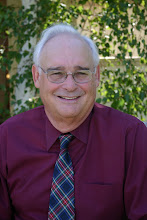
About the author: John Hardisty of Bakersfield retired as the city's development services director and now operates the consulting firm South Valley Solutions. John Hardisty is a once-a-year white water rafter who looks for adventure, but doesn't want to kill himself on the mighty Kern River. He discovered that River's End Rafting & Adventure Co. offers just the right balance of excitement and safety.
Labels:
Bakersfield,
California,
John Hardisty,
Kern River,
River's End Rafting
Sunday, May 23, 2010
Hunting for Bakersfield's 'historic character'
John Hardisty spent nearly 30 years guiding the city of Bakersfield, Calif., forward as its development services director. He managed the city’s Planning Department as Bakersfield grew to include about 143 square miles and serve a population of nearly 340,000 people.
During those years, his focus was on the present and the future. Now retired from the city and working as a planning consultant and court mediator, Hardisty’s focus is also on the past, as he writes an occasional column for The Bakersfield Californian .
Beginning with his May 23 feature on the turn-of-the-century home of the late Louise V. Olcese, a Bakersfield capitalist, Hardisty will write about the historic, significant and sometimes downright strange homes and buildings in Bakersfield.
Bakersfield, at the southern end of California’s San Joaquin Valley, has a rich history rooted in oil and agriculture. It also has a hard-scrabble reputation born of the struggles of the Depression-era Okies, who flocked to the community.
Known for its brand of Country Western music and Basque food, Bakersfield can be as sophisticated as any city – and mind you, it’s California’s 11th largest – but it can also be a bit quirky.
Hardisty’s occasional column will highlight such attractions as Bakersfield’s tallest building and explain why at 12 floors it was required to obtain a variance from the city’s height limitation. He also will interview the architect of Bakersfield’s futuristic-looking triangle building and recall the 1970s battle waged to get city clearance to build the “funny looking thing.”
At the center of what was once the city of Kern (east Bakersfield) is a sprawling, formerly elegant train station. He will tour readers through the now mostly boarded up and weather-beaten structure, which is used by the railroad to house a skeleton staff and store supplies.
“To keep moving forward, it is important for every community to understand its past,” said Hardisty, explaining the focus of his column. “To attempt progress without an understanding and respect for history is like building without a foundation.”
This sensitivity to history is particularly important to Bakersfield. The city was hit in 1952 by an earthquake that destroyed much of its downtown and many of its public buildings. Some contend Bakersfield’s historic character was turned to rubble by the earthquake. But if you look closely, you will find some remnants have survived.
Hardisty’s column will take readers on a treasure hunt for Bakersfield’s historic character. The articles will be reprinted on this blog beginning with the May 23, 2010 feature about the Olcese House.
During those years, his focus was on the present and the future. Now retired from the city and working as a planning consultant and court mediator, Hardisty’s focus is also on the past, as he writes an occasional column for The Bakersfield Californian .
Beginning with his May 23 feature on the turn-of-the-century home of the late Louise V. Olcese, a Bakersfield capitalist, Hardisty will write about the historic, significant and sometimes downright strange homes and buildings in Bakersfield.
Bakersfield, at the southern end of California’s San Joaquin Valley, has a rich history rooted in oil and agriculture. It also has a hard-scrabble reputation born of the struggles of the Depression-era Okies, who flocked to the community.
Known for its brand of Country Western music and Basque food, Bakersfield can be as sophisticated as any city – and mind you, it’s California’s 11th largest – but it can also be a bit quirky.
Hardisty’s occasional column will highlight such attractions as Bakersfield’s tallest building and explain why at 12 floors it was required to obtain a variance from the city’s height limitation. He also will interview the architect of Bakersfield’s futuristic-looking triangle building and recall the 1970s battle waged to get city clearance to build the “funny looking thing.”
At the center of what was once the city of Kern (east Bakersfield) is a sprawling, formerly elegant train station. He will tour readers through the now mostly boarded up and weather-beaten structure, which is used by the railroad to house a skeleton staff and store supplies.
“To keep moving forward, it is important for every community to understand its past,” said Hardisty, explaining the focus of his column. “To attempt progress without an understanding and respect for history is like building without a foundation.”
This sensitivity to history is particularly important to Bakersfield. The city was hit in 1952 by an earthquake that destroyed much of its downtown and many of its public buildings. Some contend Bakersfield’s historic character was turned to rubble by the earthquake. But if you look closely, you will find some remnants have survived.
Hardisty’s column will take readers on a treasure hunt for Bakersfield’s historic character. The articles will be reprinted on this blog beginning with the May 23, 2010 feature about the Olcese House.
History Hunt: Olcese House Shows Bakersfield's Character
Jack Hendrix jokes that he needs a 12-step recovery program. He’s a compulsive collector.
He collects furniture, statues and pottery. He even collects old family photos of people he doesn’t know. He finds them in second-hand stores and hangs them on the walls of the old houses he collects in east Bakersfield.
On a recent warm spring morning, I sat on the porch of the “Olcese house,” one of Hendrix’s most interesting and historic East Bakersfield homes, and discussed his compulsive collecting.
Hendrix, 69, is a retired educator, who spent most of his career as a teacher and counselor at East Bakersfield High School. An Oklahoma native, who moved to Bakersfield to live with relatives in the 1950s, Hendrix remembers watching his father work with tools as he built cabinets. That inspired Hendrix to begin collecting tools and fix-it books.
To supplement his teaching salary, Hendrix started collecting fixer-upper Bakersfield homes and turning them into rentals.
“I like to work with my hands and it was a good diversion from teaching,” he explained. “In the summers, I would work in construction, doing repairs for other people. I thought, ‘Why not acquire my own property. I love old houses.’”
His interest in buying houses shifted from those built in the 1930s and 1940s to some of the city’s oldest houses -- those built at the turn of the century in east Bakersfield.
He said he spent hours talking to the late Judge Frank Noriega in an unsuccessful attempt to buy the family’s vintage home on Baker Street, which has been renovated and turned into a reception hall.
It was during those long chats that Hendrix learned about the histories and myths of the neighborhood’s other landmark buildings, and Hendrix set his sights on the Olcese house at 528 Monterey St.
Weather-beaten and in need of repair, the house was built by Louis V. Olcese for his bride in the late 1800s. The city’s register of historic buildings did not pinpoint the construction date. During the century that followed, colorful and sometimes tragic stories unfolded within it walls.
Before telling some of those early stories, I’ll skip ahead to the present. Hendrix bought the house in 1983, after it fell briefly into the hands of a real estate speculator. The speculator had given it a quick lick of paint, leased it to a preschool and then placed it up for sale again. While he worked on its restoration, Hendrix moved into the house. He lived in there for the next 18 years, before buying another fixer upper at Flower and Baker streets, where he lives today.
The Olcese house now is called Griffins Gate, a 26-bed home for men dually diagnosed as mentally ill and substance abusers, operated by Hendrix’s non-profit organization Casa de Amigos. The stately rooms have been converted to dormitories, offices and dining halls. But the exterior is restored to a condition that would surely please its original owner.
Hendrix has pieced together most of the home’s history from the stories told by Judge Noriega and neighbors. And occasionally people will walk by to take a look and share their memories.
Olcese, the son of Italian immigrants, moved to Bakersfield as a young man from Northern California. The railroad line had reached East Bakersfield. Basque shepherds were settling in the area. Fortunes were being made lending money and outfitting settlers in this emerging commercial hub.
Olcese went into the mercantile business with Beneditto Ardizzi. Hendrix was told Olcese lived in a lavish apartment above his store until he decided to marry a young opera singer. He built the house on Monterey Street as a wedding present for his bride.
In the city’s historic resources inventory, consultant Christopher Brewer describes the Olcese house as “an excellent example of vernacular architecture.” With Hendrix’s subsequent restoration, Brewer concluded it would be eligible for inclusion in a historic register or district.
Hendrix acknowledges that Olcese spared few expenses as he combined several architectural styles. The home has a vented gablet, a turret, an oval window overlooking a covered porch that is supported by round columns, boxed eaves and gables, and double-hung windows.
Shortly after Olcese’s marriage, his bride left for a European singing tour. By all accounts that Hendrix has been given, in her absence, Olcese found a young live-in maid irresistible and a baby boy was born. Olcese and his bride divorced when she returned from her tour. He sold the Monterey Street house.
Olcese’s wealth grew. He bought acres of land that he ranched. He form a bank. But in 1929, at a relatively young age, he dropped dead in San Francisco en route to visit his sister, who lived in Piedmont. An obituary published in The Modesto Bee described him as “one of the wealthiest men in Kern County.”
Two years later, a story in The Bakersfield Californian reported Olcese Kramer, a naval officer who claimed to be Olcese’s “natural son,” reached a court settlement with Olcese’s sisters and brothers to share the estate. Although settlement details were not revealed in the news story, an attorney said “the ramifications are so great” that it would take “some time until the whole affair is settled.”
Hendrix said the Olcese house passed first into the hands of a wealthy couple. The husband was a county official and the wife a physician. He said neighbors and Noriega told him about patients walking up its stairs to be seen by the doctor.
Preoccupied by both their daughter and by “appearances,” the couple borrowed against the home to pay for a lavish wedding and to buy furniture. When they could not pay their bills, Hendrix said they lost the home to foreclosure.
An investor bought it reportedly for $1,700 and gave it to his newlywed daughter and son-in-law. Over the next several decades, the childless couple lived in the home their entire marriage.
Eventually a gas lighting system was replaced by electricity. But neither air conditioning, nor heating systems were installed until the then widowed owner sold it in the late 1970s to the real estate speculator who resold it to Hendrix.
“The neighbors were shocked,” Hendrix said, explaining that they thought the woman was wealthy. They chalked up the home’s lack of maintenance, the owner’s unwillingness to install air conditioning and her habit of wearing layers of clothing during frigid winter months to her being eccentric.
In fact, the woman was living off the property she inherited from her investor-father. As she needed money, she would sell off a house or commercial building. Reportedly she was running out of money when she sold the Olcese house for just $16,000. Hendrix paid $90,000 for it when it was resold a short time later.
Hendrix credits the woman’s poverty for the home’s historic integrity. She simply did not have the money to “modernize” the structure.
“The thing I love about old houses it that everything has a story,” Hendrix said, admitting that restoring them is costly, time-consuming and just plain hard work.
His advice to others who might be tempted to buy and restore a turn-of-the-century home: “Do it only if you can do most of the work yourself. And do it for love, not to make money.”
This article by John Hardisty (Jack) appeared first in The Bakersfield Californian on May 23, 2010.
He collects furniture, statues and pottery. He even collects old family photos of people he doesn’t know. He finds them in second-hand stores and hangs them on the walls of the old houses he collects in east Bakersfield.
On a recent warm spring morning, I sat on the porch of the “Olcese house,” one of Hendrix’s most interesting and historic East Bakersfield homes, and discussed his compulsive collecting.
Hendrix, 69, is a retired educator, who spent most of his career as a teacher and counselor at East Bakersfield High School. An Oklahoma native, who moved to Bakersfield to live with relatives in the 1950s, Hendrix remembers watching his father work with tools as he built cabinets. That inspired Hendrix to begin collecting tools and fix-it books.
To supplement his teaching salary, Hendrix started collecting fixer-upper Bakersfield homes and turning them into rentals.
“I like to work with my hands and it was a good diversion from teaching,” he explained. “In the summers, I would work in construction, doing repairs for other people. I thought, ‘Why not acquire my own property. I love old houses.’”
His interest in buying houses shifted from those built in the 1930s and 1940s to some of the city’s oldest houses -- those built at the turn of the century in east Bakersfield.
He said he spent hours talking to the late Judge Frank Noriega in an unsuccessful attempt to buy the family’s vintage home on Baker Street, which has been renovated and turned into a reception hall.
It was during those long chats that Hendrix learned about the histories and myths of the neighborhood’s other landmark buildings, and Hendrix set his sights on the Olcese house at 528 Monterey St.
Weather-beaten and in need of repair, the house was built by Louis V. Olcese for his bride in the late 1800s. The city’s register of historic buildings did not pinpoint the construction date. During the century that followed, colorful and sometimes tragic stories unfolded within it walls.
Before telling some of those early stories, I’ll skip ahead to the present. Hendrix bought the house in 1983, after it fell briefly into the hands of a real estate speculator. The speculator had given it a quick lick of paint, leased it to a preschool and then placed it up for sale again. While he worked on its restoration, Hendrix moved into the house. He lived in there for the next 18 years, before buying another fixer upper at Flower and Baker streets, where he lives today.
The Olcese house now is called Griffins Gate, a 26-bed home for men dually diagnosed as mentally ill and substance abusers, operated by Hendrix’s non-profit organization Casa de Amigos. The stately rooms have been converted to dormitories, offices and dining halls. But the exterior is restored to a condition that would surely please its original owner.
Hendrix has pieced together most of the home’s history from the stories told by Judge Noriega and neighbors. And occasionally people will walk by to take a look and share their memories.
Olcese, the son of Italian immigrants, moved to Bakersfield as a young man from Northern California. The railroad line had reached East Bakersfield. Basque shepherds were settling in the area. Fortunes were being made lending money and outfitting settlers in this emerging commercial hub.
Olcese went into the mercantile business with Beneditto Ardizzi. Hendrix was told Olcese lived in a lavish apartment above his store until he decided to marry a young opera singer. He built the house on Monterey Street as a wedding present for his bride.
In the city’s historic resources inventory, consultant Christopher Brewer describes the Olcese house as “an excellent example of vernacular architecture.” With Hendrix’s subsequent restoration, Brewer concluded it would be eligible for inclusion in a historic register or district.
Hendrix acknowledges that Olcese spared few expenses as he combined several architectural styles. The home has a vented gablet, a turret, an oval window overlooking a covered porch that is supported by round columns, boxed eaves and gables, and double-hung windows.
Shortly after Olcese’s marriage, his bride left for a European singing tour. By all accounts that Hendrix has been given, in her absence, Olcese found a young live-in maid irresistible and a baby boy was born. Olcese and his bride divorced when she returned from her tour. He sold the Monterey Street house.
Olcese’s wealth grew. He bought acres of land that he ranched. He form a bank. But in 1929, at a relatively young age, he dropped dead in San Francisco en route to visit his sister, who lived in Piedmont. An obituary published in The Modesto Bee described him as “one of the wealthiest men in Kern County.”
Two years later, a story in The Bakersfield Californian reported Olcese Kramer, a naval officer who claimed to be Olcese’s “natural son,” reached a court settlement with Olcese’s sisters and brothers to share the estate. Although settlement details were not revealed in the news story, an attorney said “the ramifications are so great” that it would take “some time until the whole affair is settled.”
Hendrix said the Olcese house passed first into the hands of a wealthy couple. The husband was a county official and the wife a physician. He said neighbors and Noriega told him about patients walking up its stairs to be seen by the doctor.
Preoccupied by both their daughter and by “appearances,” the couple borrowed against the home to pay for a lavish wedding and to buy furniture. When they could not pay their bills, Hendrix said they lost the home to foreclosure.
An investor bought it reportedly for $1,700 and gave it to his newlywed daughter and son-in-law. Over the next several decades, the childless couple lived in the home their entire marriage.
Eventually a gas lighting system was replaced by electricity. But neither air conditioning, nor heating systems were installed until the then widowed owner sold it in the late 1970s to the real estate speculator who resold it to Hendrix.
“The neighbors were shocked,” Hendrix said, explaining that they thought the woman was wealthy. They chalked up the home’s lack of maintenance, the owner’s unwillingness to install air conditioning and her habit of wearing layers of clothing during frigid winter months to her being eccentric.
In fact, the woman was living off the property she inherited from her investor-father. As she needed money, she would sell off a house or commercial building. Reportedly she was running out of money when she sold the Olcese house for just $16,000. Hendrix paid $90,000 for it when it was resold a short time later.
Hendrix credits the woman’s poverty for the home’s historic integrity. She simply did not have the money to “modernize” the structure.
“The thing I love about old houses it that everything has a story,” Hendrix said, admitting that restoring them is costly, time-consuming and just plain hard work.
His advice to others who might be tempted to buy and restore a turn-of-the-century home: “Do it only if you can do most of the work yourself. And do it for love, not to make money.”
This article by John Hardisty (Jack) appeared first in The Bakersfield Californian on May 23, 2010.
Tuesday, April 20, 2010
CAN DISASTERS BE TOO BIG TO FIX?

The annual conference of the American Planning Association, held last week in New Orleans, focused on the city’s recovery after flooding during Hurricane Katrina. Throughout the city were billboards advertising the new HBO series “Treme,” about people displaced by Katrina from an historic, but poor New Orleans neighborhood.
Saturating the television airways were clips of the series’ star, John Goodman, chewing out a British reporter who suggested New Orleans was past its prime and not worth saving – don’t save the city, its food or its music. Goodman ends up grabbing the guy’s microphone and heaving into the city’s rubble.
Goodman correctly shouts at the reporter that the destruction of the Mississippi Gulf Coast from Katrina five years ago was a natural disaster. The destruction of New Orleans was a manmade disaster (he actually used less polite.) Here’s a link to the YouTube video.
In their book “Clear As Mud,” Robert B. Olshanky, an urban planning professor at the University of Illinois, and Laurie A. Johnson, an urban planning consultant, document the run-up to this manmade disaster and what will be needed to put New Orleans back together. For years, government officials were warned that New Orleans’ levees were on the verge of breaking and people would drown like rats.
Goodman’s exchange with the pesty reporter was (more politely) replicated during an APA conference session. An out-of-town planner asked a similar question: Is it possible that it is just too expensive to rebuild New Orleans?
A panel of New Orleans activists and city officials, some of whom had seen their homes wash away when the water broke through defective levees, basically “ate the man’s face.”
Their point: Don’t question the money spent to restore New Orleans and return people to their homes. That question is not raised when rivers repeatedly flood Midwest cities, tornadoes tear apart neighborhoods, or when wildfires and earthquakes ravage California.
It’s going to take billions of dollars and many more years to put New Orleans and the Gulf Coast back together. Can we, as a nation, just walk away?
John Hardisty (Jack) retired in 2004 as the development services director for the city of Bakersfield, Calif. In 1952, a massive earthquake leveled most of Bakersfield’s downtown. Did anyone suggest the city wasn’t worth rebuilding?
Wednesday, March 24, 2010
HELLO...IS ANYBODY LISTENING?
Several weeks ago, I wrote about Assemblyman Pedro Nava’s legislation, AB 1588, which proposes to require lenders to enter into discussions, or mediate loan modification requests, when property is headed for foreclosure.
See “As foreclosure crisis keeps growing, lenders, borrowers need mediation,” by John Hardisty http://tinyurl.com/MediateForeclosures
The Santa Barbara assemblyman proposes to set up a system that already exists in several other states.
As Nava’s bill makes its way through the California Legislature, the Bank of America now is boasting that it is stepping up its efforts to reduce mortgage-loan balances to avert foreclosures. According to The Wall Street Journal, the plan is the mortgage industry’s boldest move yet to address the plight of millions of U.S. homeowners who are “underwater,” owing more than the current values of their homes.
“It enhances an agreement Bank of America reached 18 months ago with state attorneys general to settle claims they made over certain high-risk loans made by Countrywide Financial before Bank of America acquired that lender in mid-2008,” according to The Journal.
But just this week, cold water was thrown on the Home Affordable Modification Program, the $75 billion effort to bring “underwater” homeowners relief. Neil Barofsky, the Treasury Department’s special inspector general for the Troubled Asset Relief Program, called the existing definition of success for HAMP “essentially meaningless.”
The conclusion: It has been oversold by the Treasury Department and is likely to be a failure when it wraps up in 2012.
Why? Partially because lenders are not compelled to even acknowledge troubled borrowers when they request loan modifications.
For an on the ground “reality check,” go to Steven B. Porter’s blog
http://tinyurl.com/IsTheBankListening
Porter is an attorney and mediator who lives in Tehachapi, Calif. In a blow-by-blow account (which would be funny, if it were not so serious) he details more than five hours on the telephone trying to even find someone at the Bank of America willing to talk to him about a client’s mortgage problem.
“A funny thing happened to me on the way to trying to obtain some information from the Bank of America today (March 23, 2010). What follows is true, and the actual events are not made up, and the names were not changed to protect the innocent.”
He was finally referred to a department within the bank that was closed for the day.
“Just in case you thought this issue was unique to the Bank of America, I recently had a similar experience with Chase over a two-day timeframe,” Porter wrote. “With Chase, I spoke to 17 individuals before I was put in contact with a person who could answer my questions.”
John Hardisty is a Bakersfield-based mediator and land-use consultant. His company's website is http://www.svs2help.com/
See “As foreclosure crisis keeps growing, lenders, borrowers need mediation,” by John Hardisty http://tinyurl.com/MediateForeclosures
The Santa Barbara assemblyman proposes to set up a system that already exists in several other states.
As Nava’s bill makes its way through the California Legislature, the Bank of America now is boasting that it is stepping up its efforts to reduce mortgage-loan balances to avert foreclosures. According to The Wall Street Journal, the plan is the mortgage industry’s boldest move yet to address the plight of millions of U.S. homeowners who are “underwater,” owing more than the current values of their homes.
“It enhances an agreement Bank of America reached 18 months ago with state attorneys general to settle claims they made over certain high-risk loans made by Countrywide Financial before Bank of America acquired that lender in mid-2008,” according to The Journal.
But just this week, cold water was thrown on the Home Affordable Modification Program, the $75 billion effort to bring “underwater” homeowners relief. Neil Barofsky, the Treasury Department’s special inspector general for the Troubled Asset Relief Program, called the existing definition of success for HAMP “essentially meaningless.”
The conclusion: It has been oversold by the Treasury Department and is likely to be a failure when it wraps up in 2012.
Why? Partially because lenders are not compelled to even acknowledge troubled borrowers when they request loan modifications.
For an on the ground “reality check,” go to Steven B. Porter’s blog
http://tinyurl.com/IsTheBankListening
Porter is an attorney and mediator who lives in Tehachapi, Calif. In a blow-by-blow account (which would be funny, if it were not so serious) he details more than five hours on the telephone trying to even find someone at the Bank of America willing to talk to him about a client’s mortgage problem.
“A funny thing happened to me on the way to trying to obtain some information from the Bank of America today (March 23, 2010). What follows is true, and the actual events are not made up, and the names were not changed to protect the innocent.”
He was finally referred to a department within the bank that was closed for the day.
“Just in case you thought this issue was unique to the Bank of America, I recently had a similar experience with Chase over a two-day timeframe,” Porter wrote. “With Chase, I spoke to 17 individuals before I was put in contact with a person who could answer my questions.”
John Hardisty is a Bakersfield-based mediator and land-use consultant. His company's website is http://www.svs2help.com/
Sunday, March 21, 2010
HILLS ARE ALIVE WITH WILDFLOWERS
The hills around Bakersfield, Calif., definitely are alive with wildflowers. If you haven’t visited the foothills, do so quickly before the blistering Central Valley heat melts the flowers away. I was out taking photos in the hills above Arvin, on the border of the massive Tejon Ranch. The number of wildflowers was nearly rivaled by the number of “viewers” and photographers.
In a photo posted here, Ron Siemens of Bakersfield seemed to be engulfed by wildflowers as he takes a photograph in a field as part offered through the Levan Institute for Life-Long Learning at Bakersfield College. The institute offers low-cost enrichment classes to local people in the boomer and beyond age bracket. Information about the institute and the class schedule can be found at
http://tinyurl.com/yje43zg
The Kern County Board of Trade has launched a wildflower blog at
http://tinyurl.com/yzc6b9z
where you can find information and a map noting good viewing areas. More information can be obtained by calling 661.322.WILD
It’s times like this that makes it great to live in Kern County, which is the San Joaquin Valley’s southern-most county, separated from Southern California by the Tehachapi Mountains.
(Photos taken by John Hardisty , who also is in the Levan Class)
In a photo posted here, Ron Siemens of Bakersfield seemed to be engulfed by wildflowers as he takes a photograph in a field as part offered through the Levan Institute for Life-Long Learning at Bakersfield College. The institute offers low-cost enrichment classes to local people in the boomer and beyond age bracket. Information about the institute and the class schedule can be found at
http://tinyurl.com/yje43zg
The Kern County Board of Trade has launched a wildflower blog at
http://tinyurl.com/yzc6b9z
where you can find information and a map noting good viewing areas. More information can be obtained by calling 661.322.WILD
It’s times like this that makes it great to live in Kern County, which is the San Joaquin Valley’s southern-most county, separated from Southern California by the Tehachapi Mountains.
(Photos taken by John Hardisty , who also is in the Levan Class)
Friday, March 19, 2010
IN THE EYE OF THE NATION'S ECONOMIC STORM
Freelance writer Dianne Hardisty writes about Stacy Carlson, a native of Bakersfield, Calif., who signed on to be Treasury Secretary Henry Paulson’s speech writer in the closing months of the Bush administration. Her predecessor assured her that the office pace would be relatively slow and she would have lots of time to complete projects. Carlson was in for a rude surprise.
Early warning signs appeared in late 2007, but Paulson and others in the Bush administration believed the U.S. economy was in for just a “correction.” The warning signs grew, the correction turned into a crisis. And Carlson was tasked with turning Paulson’s words into clarity and reassurance for an increasingly frightened America.
Carlson writes in a plainspoken manner about her job, the efforts of Paulson and others to head off an economic meltdown, and the causes of the crisis in her first book, “You, Me & the U.S. Economy.”
Dianne Hardisty writes in The Bakersfield Californian how Carlson found herself in the eye of this economic storm. Read Diane Hardisty's story by clicking onto
http://tinyurl.com/StacyCarlson/
Stacy Carlson is shown in photograph.
Labels:
Bakersfield,
California,
Diane,
Dianne Hardisty,
Economy,
Henry Paulson,
Meltdown,
Stacy Carlson
Subscribe to:
Posts (Atom)